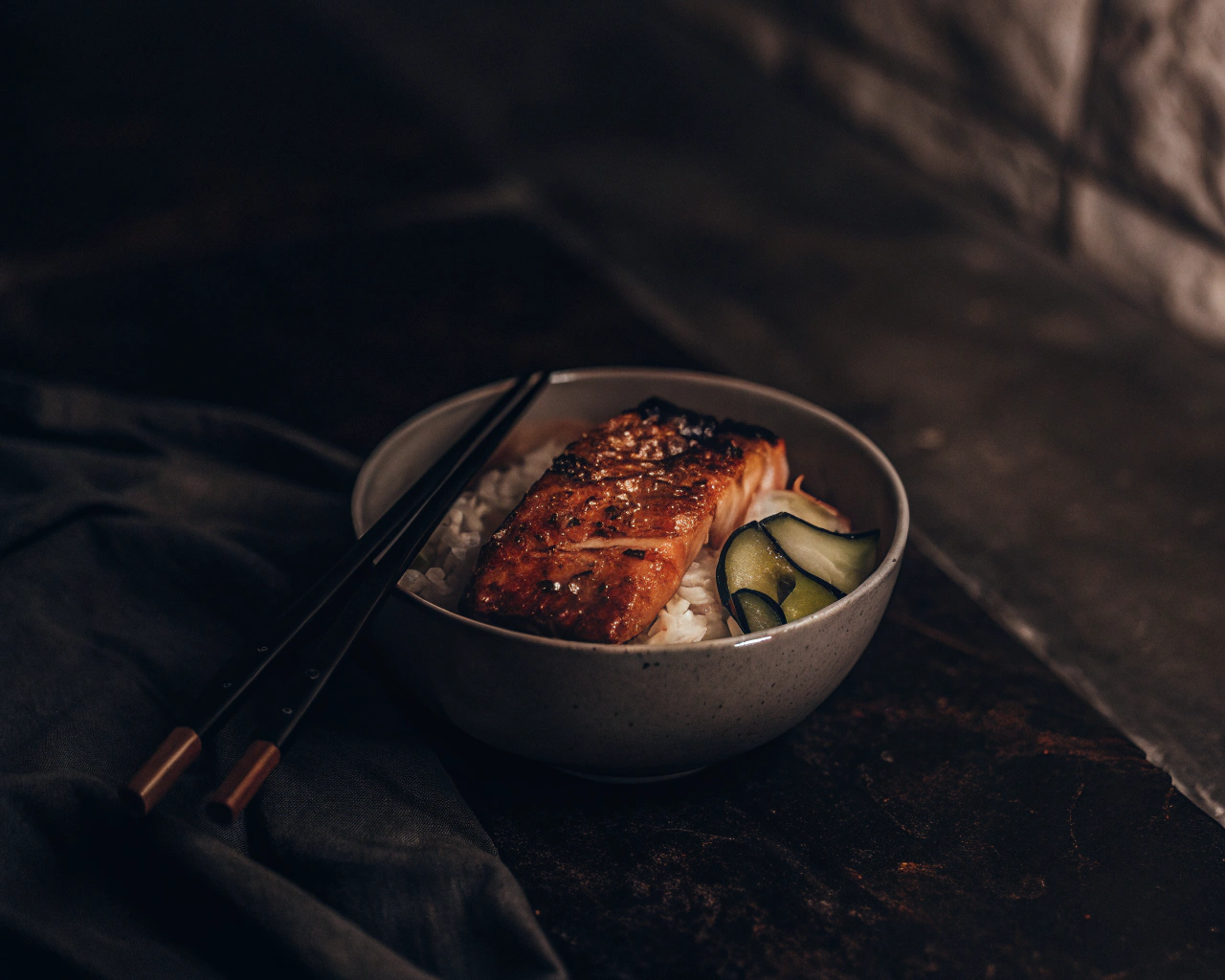
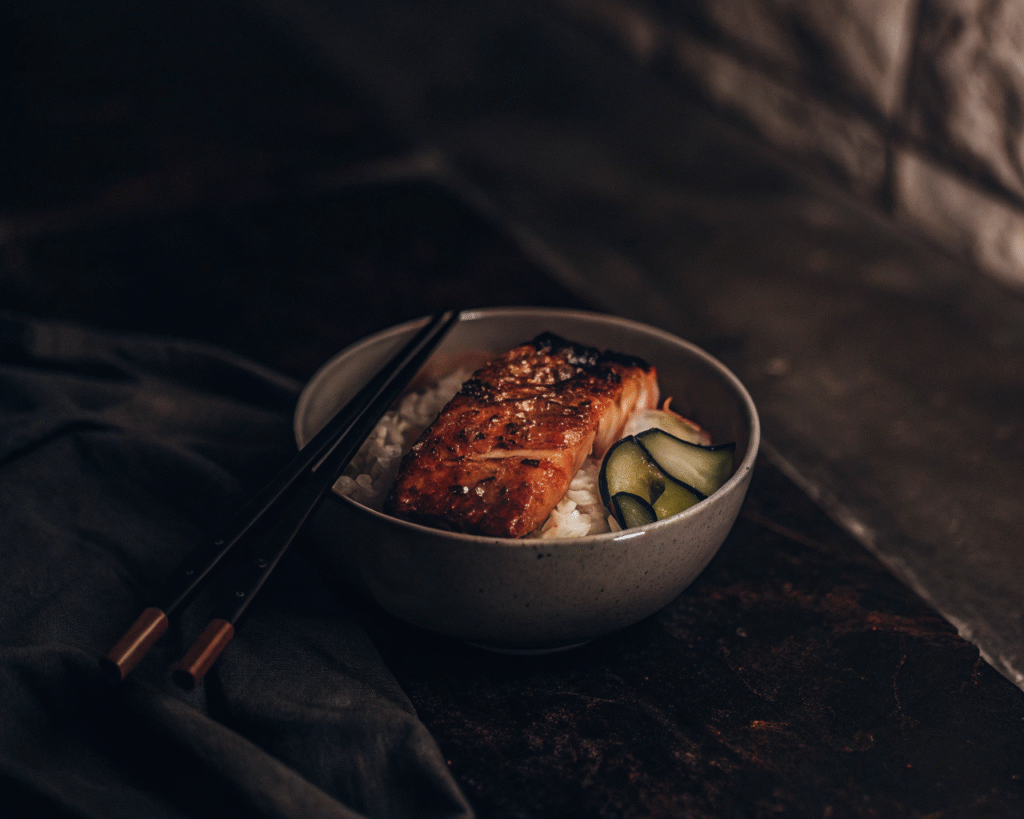
If you’re looking for a dinner that’s healthy, outrageously flavorful, and comes together in under 30 minutes, this Sticky Orange Gochujang Salmon Rice Bowl is about to become your new obsession. This Asian fusion bowl combines perfectly cooked, crispy-skinned salmon glazed with a sweet, spicy, and tangy orange gochujang sauce, served over fluffy rice with vibrant vegetables and all your favorite toppings. It’s the kind of meal that feels like takeout but is actually better—fresher, healthier, and customized exactly how you like it.
What makes this recipe so special is the sauce. The combination of Korean gochujang (fermented chili paste), fresh orange juice, honey, and savory ingredients creates an addictive glaze that’s simultaneously sweet, spicy, tangy, and umami-rich. It caramelizes beautifully on the salmon, creating that irresistible sticky coating that clings to every bite. One taste and you’ll understand why salmon bowls have taken over TikTok, Instagram, and meal prep routines everywhere.
This isn’t just another salmon recipe—it’s a complete, balanced meal in a bowl. You get protein from the salmon, complex carbs from the rice, vitamins and fiber from fresh vegetables, and an explosion of flavors and textures in every forkful. Crispy salmon skin, tender flaky fish, creamy avocado, crunchy cucumber, and that glossy, finger-licking-good sauce all come together in perfect harmony. Plus, it’s endlessly customizable to your preferences and dietary needs.
Whether you’re meal prepping for the week, looking for a quick weeknight dinner, trying to eat healthier without sacrificing flavor, or just jumping on the viral bowl trend, this recipe delivers every single time. The best part? It looks absolutely stunning—restaurant-quality presentation that’s totally Instagram-worthy but requires zero advanced cooking skills. Let’s make the bowl that will have you canceling your takeout orders!
Table of Contents
Why You’ll Love This Recipe
Ready in 30 Minutes: From start to finish, this complete meal comes together faster than delivery and tastes infinitely better.
Perfectly Balanced: Protein, healthy fats, complex carbs, and vegetables all in one bowl—it’s nutritionist-approved deliciousness.
Flavor Explosion: The orange gochujang glaze is sweet, spicy, tangy, and savory all at once. It’s genuinely addictive.
Meal Prep Champion: Make multiple portions at once and have incredible lunches or dinners ready for days.
Customizable: Swap proteins, change vegetables, adjust spice level, make it vegan—this bowl adapts to your needs.
Healthier Than Takeout: Fresh ingredients, no MSG or excess sodium, and you control exactly what goes in.
Crispy Salmon Skin: Learn the technique for achieving that coveted restaurant-quality crispy skin at home.
Trending Recipe: Salmon bowls are having a major moment on social media, and for good reason—they’re incredible.
Beautiful Presentation: These bowls photograph beautifully and look like they came from an upscale restaurant.
Budget-Friendly: Salmon might seem expensive, but when you build a complete meal around it with rice and veggies, it’s actually quite economical.
Ingredients You’ll Need
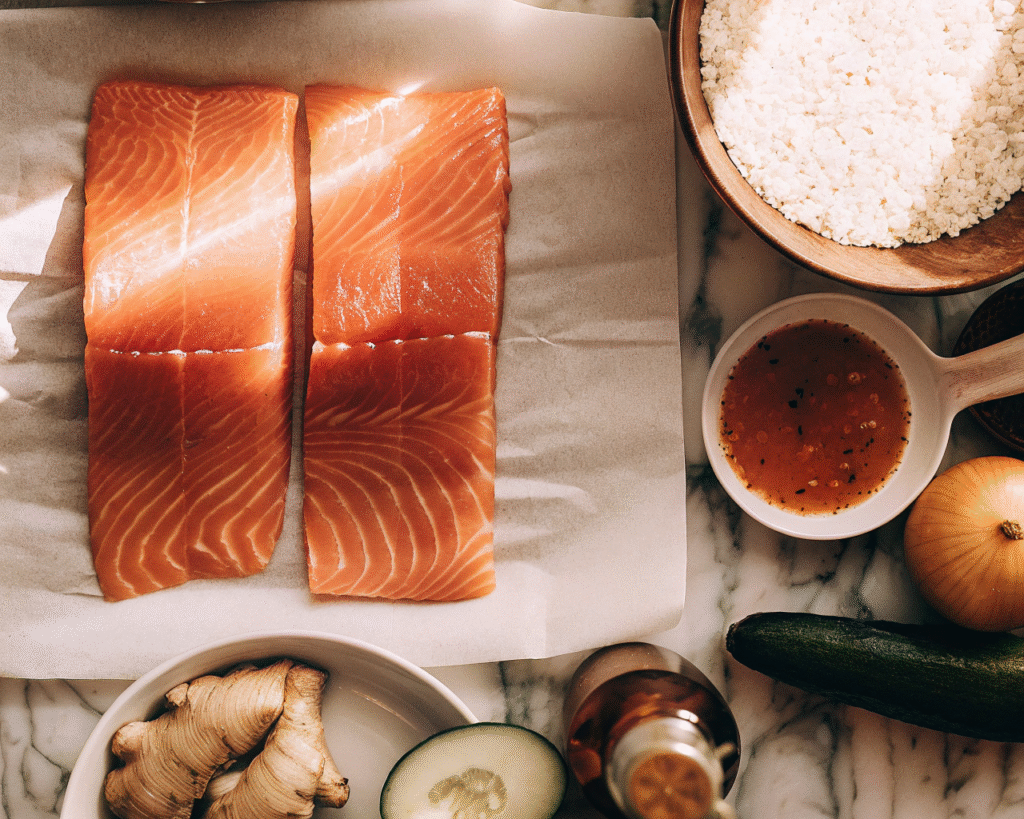
For the Orange Gochujang Salmon:
- 4 salmon fillets (6 oz each, skin-on) – Fresh, wild-caught if possible
- 1 tablespoon olive oil or avocado oil – For searing
- Salt and black pepper – For seasoning
- Sesame seeds – For garnish
- Sliced green onions – For topping
For the Orange Gochujang Glaze:
- 3 tablespoons gochujang paste – Korean fermented chili paste (adjust for spice preference)
- 1/4 cup fresh orange juice – About 1 large orange
- Zest of 1 orange – For intense citrus flavor
- 2 tablespoons honey – Or maple syrup for refined sugar-free
- 2 tablespoons soy sauce or tamari – Tamari for gluten-free
- 1 tablespoon rice vinegar – Adds tang
- 2 cloves garlic, minced – Fresh is essential
- 1 teaspoon fresh ginger, grated – Key for authentic flavor
- 1 teaspoon sesame oil – Adds nutty depth
- 1 teaspoon cornstarch – For thickening (optional)
For the Rice Bowl Base:
- 2 cups cooked rice – White, brown, jasmine, or sushi rice
- 1 tablespoon rice vinegar – For seasoning rice (optional)
- 1 teaspoon sugar – If making sushi-style rice
- Pinch of salt – For seasoning
For the Bowl Toppings:
- 1 large cucumber, sliced or ribboned – Adds crunch and freshness
- 1 large avocado, sliced – Creamy richness
- 1 cup edamame – Protein boost (frozen, thawed)
- 1 cup shredded purple cabbage – Color and crunch
- 1 medium carrot, julienned or ribboned – Sweetness and texture
- 2-3 radishes, thinly sliced – Peppery bite
- Nori sheets, cut into strips – Seaweed for umami
- Pickled ginger – Refreshing palate cleanser
Optional Add-Ons:
- Sriracha mayo – Drizzle for extra creaminess
- Kimchi – Fermented spicy cabbage
- Crispy fried onions or shallots – Extra crunch
- Soft-boiled egg – Additional protein
- Microgreens or sprouts – Fresh garnish
- Furikake seasoning – Japanese rice seasoning
- Toasted nori strips – More umami
- Chili crisp oil – Extra heat and texture
Equipment You’ll Need
- Large skillet (preferably cast iron or stainless steel)
- Small saucepan or bowl
- Rice cooker or pot for rice
- Fish spatula or regular spatula
- Whisk
- Microplane or fine grater (for ginger/garlic)
- Sharp knife and cutting board
- Measuring cups and spoons
- 4 serving bowls
- Vegetable peeler (optional, for ribbons)
Step-by-Step Instructions
Step 1: Prepare the Rice
Start by cooking your rice according to package directions. For the best bowl experience, slightly warm rice is ideal—not piping hot, not cold.
For sushi-style rice: Once cooked, mix 1 tablespoon rice vinegar, 1 teaspoon sugar, and a pinch of salt. Gently fold into the warm rice and let cool slightly.
Pro tip: Make the rice ahead of time! Day-old rice actually works perfectly for bowls and is easier to handle.
Step 2: Make the Orange Gochujang Glaze
In a small bowl, whisk together the gochujang paste, fresh orange juice, orange zest, honey, soy sauce, rice vinegar, minced garlic, grated ginger, and sesame oil. Whisk until completely smooth and emulsified.
Taste and adjust: Want it spicier? Add more gochujang. Sweeter? More honey. Tangier? Extra orange juice. This sauce should balance sweet, spicy, tangy, and savory.
For a thicker glaze, whisk in 1 teaspoon cornstarch. You can heat the sauce gently in a small saucepan until it thickens, or brush it on the salmon and let it thicken while cooking.
The secret: Fresh orange juice and zest make ALL the difference. Don’t use bottled orange juice—it won’t have the same bright, vibrant flavor.
Step 3: Prepare Your Salmon
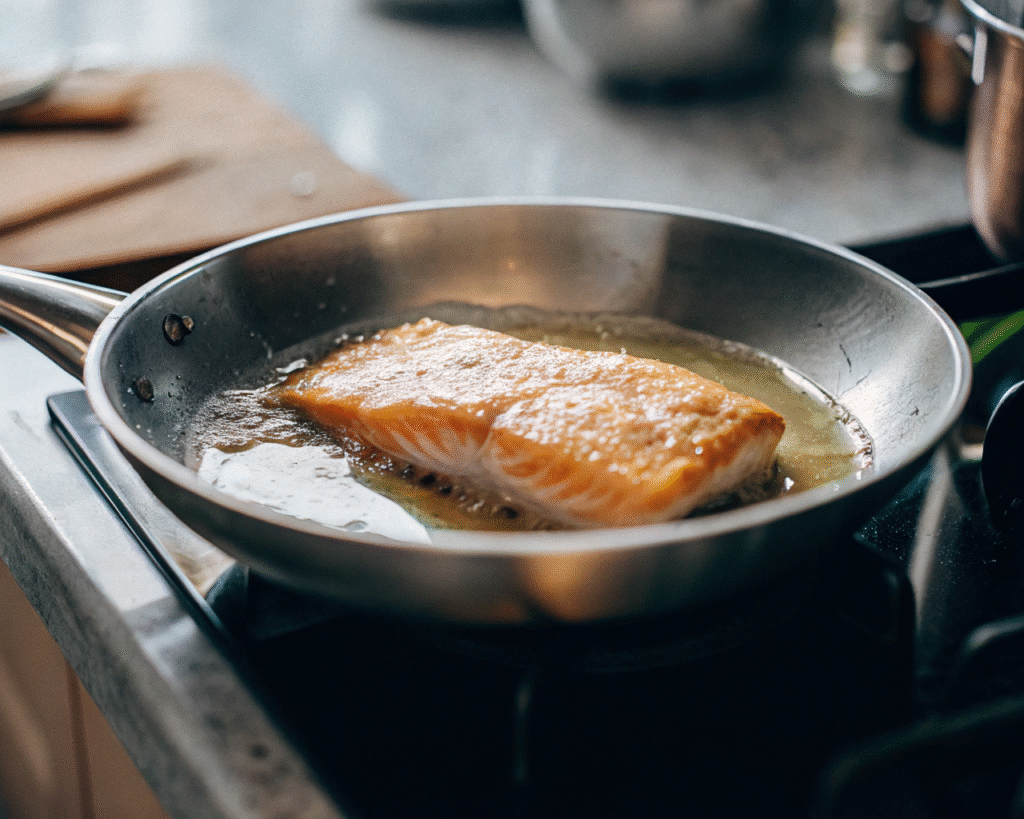
Pat the salmon fillets completely dry with paper towels—this is crucial for crispy skin! Season both sides generously with salt and black pepper.
Critical tip: Make sure the salmon is at room temperature before cooking (take it out of the fridge 15-20 minutes before cooking). Cold salmon won’t cook evenly.
Check for pin bones by running your fingers along the fillet. Remove any you find with tweezers or needle-nose pliers.
Step 4: Prep Your Bowl Toppings
While the salmon cooks, prepare all your toppings:
- Slice the cucumber into rounds or use a peeler to create ribbons
- Slice the avocado just before serving to prevent browning
- Julienne the carrot (or use a peeler for ribbons)
- Thinly slice the radishes
- Shred the purple cabbage
- If using edamame, make sure it’s thawed and drained
Organization tip: Arrange all your toppings in small bowls or on a plate for easy bowl assembly—it makes the process so much faster!
Step 5: Cook the Salmon (The Most Important Step!)
Heat a large skillet (preferably cast iron or stainless steel) over medium-high heat. Add the oil and let it get hot—it should shimmer but not smoke.
For crispy skin: Place the salmon fillets skin-side down in the pan. Press down gently with a spatula for the first 30 seconds to ensure even contact with the pan. This is the secret to crispy skin!
Cook skin-side down for 5-6 minutes without moving the fish. Resist the urge to flip or peek! The skin needs uninterrupted contact with the hot pan to crisp up. You’ll know it’s ready when the salmon releases easily from the pan and the flesh is cooked about 2/3 of the way up the sides (you can see this from the side).
Critical: Don’t flip too early or the skin will tear and stick!
Step 6: Glaze and Finish the Salmon
Carefully flip the salmon fillets to the flesh side. Cook for 1-2 minutes.
Brush or spoon about half of the orange gochujang glaze generously over the top (skin side) of each fillet. Let it cook for another minute, allowing the glaze to caramelize and become sticky.
Flip the salmon back to skin-side down one final time and brush with more glaze. Cook for 30 seconds to 1 minute until the glaze is caramelized and sticky.
Doneness check: The salmon should be just cooked through (or medium-rare in the center if you prefer). It should flake easily with a fork and register 125-130°F (52-54°C) on an instant-read thermometer for medium, or 145°F (63°C) for well-done.
Pro tip: Remove salmon from heat when it’s slightly underdone—carryover cooking will finish it perfectly!
Step 7: Assemble Your Beautiful Bowls
Now for the fun part! Here’s how to build Instagram-worthy bowls:
- Base: Add about 1 cup of rice to each bowl, spreading it slightly to one side or in the center.
- Protein: Place one glazed salmon fillet on top of or beside the rice. Drizzle any remaining glaze over the salmon.
- Vegetables: Arrange your toppings in separate sections around the bowl for that beautiful, organized look:
- Cucumber slices or ribbons
- Avocado slices
- Edamame
- Purple cabbage
- Carrot ribbons
- Radish slices
- Finishing touches:
- Sprinkle sesame seeds over the salmon
- Add sliced green onions
- Place nori strips on top
- Add a dollop of pickled ginger
- Drizzle with extra sauce if desired
Presentation tip: Use tweezers or chopsticks to arrange toppings neatly for that professional bowl aesthetic!
Step 8: Serve and Enjoy
Serve immediately while the salmon is warm and the skin is still crispy. Provide chopsticks or forks, and encourage everyone to mix everything together—that’s where the magic happens when all the flavors combine!
The experience: Break up the salmon, mix it with the rice, and get a little bit of everything in each bite. The creamy avocado, crunchy vegetables, sticky glazed salmon, and seasoned rice create the perfect balance.
Expert Tips for Perfect Salmon Bowls
Crispy Skin is Everything: Pat salmon completely dry, use a hot pan, press down initially, and don’t move it until it’s ready to flip. These steps guarantee crispy skin.
Room Temperature Salmon: Cold salmon straight from the fridge won’t cook evenly. Let it sit out for 15-20 minutes before cooking.
Don’t Overcook: Salmon continues cooking after you remove it from heat. Pull it slightly early for perfect, moist fish.
Fresh Orange is Key: The bright, fresh citrus flavor from real orange juice and zest makes this glaze special. Bottled juice won’t compare.
Gochujang Quality Matters: Use authentic Korean gochujang from an Asian grocery store. The flavor is richer and more complex than generic brands.
Adjust Spice Level: Gochujang varies in heat. Start with 2 tablespoons if you’re sensitive to spice, or go up to 4 tablespoons if you love heat.
Prep Everything First: Have all your toppings ready before you start cooking the salmon. Once the fish is done, you want to assemble and serve immediately.
Rice Temperature: Slightly warm or room temperature rice is ideal. Hot rice can make the bowl too steamy and wilt your fresh vegetables.
Variety of Textures: Include something crunchy (cucumber, cabbage), something creamy (avocado), something soft (rice), and something with bite (radish). Texture variety makes these bowls addictive.
Make Extra Glaze: This sauce is so good you’ll want extra for drizzling. Double the recipe and keep it in the fridge for up to a week.
Delicious Variations to Try
Crispy Tofu Version (Vegan)
Replace salmon with crispy pan-fried or air-fried tofu. Press extra-firm tofu, cube it, toss with cornstarch, and fry until golden. Glaze with the same sauce!
Spicy Tuna Bowl
Swap salmon for seared ahi tuna (cooked rare). The orange gochujang glaze is incredible on tuna!
Chicken Teriyaki Style
Use chicken thighs instead of salmon. The glaze works beautifully with chicken too.
Shrimp Bowl
Use large shrimp for a lighter, quicker-cooking protein. Perfect for those who don’t like salmon.
Quinoa Base
Replace rice with quinoa or cauliflower rice for lower carbs and extra protein.
Spicy Mayo Drizzle
Mix equal parts mayo and sriracha for a creamy, spicy drizzle over the top.
Korean-Inspired
Add kimchi, gochugaru (Korean chili flakes), and a soft-boiled egg for more Korean flavors.
Poke-Style
Serve salmon raw (sushi-grade only!), diced and marinated in the glaze like poke.
Extra Veggies
Add steamed broccoli, snap peas, bell peppers, or any vegetables you love.
Mango Addition
Add diced fresh mango for a sweet contrast to the spicy glaze.
Meal Prep Instructions
This recipe is perfect for meal prep! Here’s how:
The Make-Ahead Method:
- Rice: Cook 4-5 days worth and store in the fridge
- Glaze: Make a double batch; it keeps for 2 weeks refrigerated
- Vegetables: Prep and store separately in airtight containers (slice everything except avocado)
- Salmon: Cook fresh each day for best quality, OR cook all portions and reheat gently
Assembly for Meal Prep:
- Portion rice into 4-5 meal prep containers
- Add cooked, cooled salmon to each
- Add all vegetables except avocado (add fresh when eating)
- Store glaze separately in small containers or drizzle just before eating
- Store in fridge for up to 4 days
Reheating:
- Microwave: 1-2 minutes at 50% power (to avoid overcooking salmon)
- Oven: 300°F for 10 minutes (salmon stays moister this way)
- Eat cold: These bowls are actually delicious cold too!
Pro meal prep tip: Cook extra salmon and use it in salads, wraps, or other meals throughout the week.
Storage and Leftovers
Refrigerator: Store components separately in airtight containers for up to 4 days. Keep salmon, rice, vegetables, and glaze separate for best quality.
Freezer:
- Salmon: Freeze cooked salmon (without glaze) for up to 2 months. Wrap tightly.
- Rice: Freeze portions in freezer bags for up to 3 months
- Glaze: Freeze in ice cube trays, then transfer to a bag for up to 3 months
Reheating Tips:
- Rice: Microwave with a damp paper towel over it to prevent drying
- Salmon: Reheat gently to avoid overcooking. Room temperature is also delicious!
- Glaze: Thaw and whisk to re-emulsify if separated
Leftover Ideas:
- Break up salmon and make salmon fried rice
- Use in tacos with the glaze as sauce
- Add to a green salad for a protein boost
- Make salmon sushi rolls
- Toss with noodles for a quick salmon noodle bowl
Nutritional Information
Per Serving (1 complete bowl):
- Calories: 620
- Total Fat: 24g
- Saturated Fat: 4g
- Omega-3 Fatty Acids: 2,200mg
- Cholesterol: 95mg
- Sodium: 780mg
- Total Carbohydrates: 58g
- Dietary Fiber: 8g
- Sugars: 12g
- Protein: 42g
Key Nutrients:
- Vitamin A: 45% DV
- Vitamin C: 35% DV
- Vitamin D: 110% DV
- Calcium: 8% DV
- Iron: 15% DV
- Potassium: 28% DV
- Vitamin B12: 120% DV
Health Benefits:
- High in heart-healthy omega-3 fatty acids
- Excellent source of complete protein
- Rich in vitamins and minerals
- Good source of fiber from vegetables
- Balanced macros for sustained energy
- Anti-inflammatory properties from salmon and ginger
Dietary Info:
- Can be made gluten-free (use tamari)
- Can be made dairy-free (naturally is)
- High protein
- Pescatarian
- Can be made low-carb (use cauliflower rice)
Serving Suggestions
These bowls are a complete meal, but you can serve alongside:
Additional Sides:
- Miso soup
- Seaweed salad
- Gyoza or dumplings (pot stickers)
- Spring rolls
- Edamame with sea salt
- Asian cucumber salad
Beverage Pairings:
- Japanese green tea (hot or iced)
- Sake (hot or cold)
- Light beer (Sapporo, Asahi)
- Riesling or Pinot Grigio (white wine)
- Sparkling water with lime
Occasion Ideas:
- Weeknight dinner (so quick!)
- Meal prep Sunday
- Healthy lunch at the office
- Date night in (looks fancy!)
- Post-workout meal (protein-packed)
- Dinner party (make a bowl bar!)
Troubleshooting Common Issues
Salmon skin won’t crisp: Pan wasn’t hot enough, salmon was too wet, or you moved it too soon. Pat very dry and don’t touch for 5-6 minutes.
Salmon is overcooked: You cooked it too long. Remove when slightly underdone—it continues cooking off the heat.
Glaze is too spicy: Add more honey and orange juice to balance. Start with less gochujang next time.
Glaze is too thin: Simmer it in a saucepan until reduced, or add cornstarch slurry (1 tsp cornstarch + 1 tsp water).
Glaze is too thick: Thin with a little orange juice or water until desired consistency.
Salmon sticks to pan: Pan wasn’t hot enough, or salmon wasn’t dry. Use a fish spatula and be patient—it will release when ready.
Rice is mushy: Too much water or overcooked. Use proper rice-to-water ratio and don’t stir during cooking.
Bowl looks messy: Arrange toppings in neat sections rather than scattering. Use chopsticks or tweezers for precision.
Not enough flavor: Season your rice! Add the vinegar-sugar mixture, or just salt. Unseasoned rice makes the whole bowl bland.
Frequently Asked Questions
Can I use frozen salmon?
Yes! Thaw completely in the fridge overnight, then pat very dry before cooking.
What is gochujang?
Korean fermented red chili paste. It’s spicy, slightly sweet, savory, and umami-rich. Find it at Asian grocery stores or online.
Can I make this without gochujang?
Use sriracha + a little miso paste as a substitute, though the flavor won’t be quite the same.
Do I have to eat the salmon skin?
No, but it’s delicious when crispy! If you don’t like it, simply peel it off after cooking.
Can I use skinless salmon?
Yes, but you’ll miss out on that crispy texture. Cook flesh-side down first to get a nice sear.
What type of rice is best?
Short-grain white rice (sushi rice) or jasmine rice work best. Brown rice is healthier but takes longer to cook.
Can I make this gluten-free?
Yes! Use tamari instead of soy sauce and check that your gochujang is gluten-free (most are, but verify).
Is this spicy?
Moderately spicy from the gochujang, but the orange and honey balance it. Adjust gochujang amount to your preference.
Can kids eat this?
Yes! Reduce or omit the gochujang for a milder version. Most kids love the sweet orange glaze.
How do I know when salmon is done?
It should flake easily and be opaque throughout (or slightly translucent in the very center if you prefer medium).
Why This Recipe Works
The brilliance of this bowl lies in the perfect balance of elements:
The Glaze: Gochujang provides fermented depth and heat, orange adds brightness and natural sweetness, honey balances with more sweetness, and soy sauce brings umami and salt. Together, they create a complex, addictive flavor profile.
The Cooking Method: Searing skin-side down first with steady heat creates crispy skin while keeping the flesh moist and tender. Glazing at the end caramelizes the sauce without burning it.
The Bowl Composition: You get:
- Protein: Omega-3 rich salmon
- Carbs: Rice for energy and satisfaction
- Healthy fats: Avocado and salmon
- Fiber & nutrients: Abundance of fresh vegetables
- Flavor complexity: Sweet, spicy, tangy, savory, umami all in one bowl
The Temperature Contrast: Warm salmon and rice with cool, crisp vegetables creates an exciting eating experience.
The Texture Variety: Crispy skin, flaky fish, creamy avocado, crunchy vegetables, soft rice—every bite is interesting.
The Visual Appeal: The colorful array of toppings makes these bowls as beautiful as they are delicious, which actually enhances the eating experience!
The Final Bowl
This Sticky Orange Gochujang Salmon Rice Bowl is everything a modern meal should be: quick, healthy, flavorful, beautiful, and satisfying. It’s proof that eating well doesn’t have to be boring or time-consuming. In just 30 minutes, you can create a restaurant-quality bowl that nourishes your body and excites your taste buds.
What makes this recipe truly special is how it brings together Korean, Japanese, and Western flavors in a way that feels both trendy and timeless. The star is undoubtedly that orange gochujang glaze—sweet, spicy, tangy, and utterly addictive. Once you master this sauce, you’ll find yourself putting it on everything from chicken to tofu to roasted vegetables.
These bowls are also incredibly empowering to make. There’s something satisfying about nailing that crispy salmon skin, assembling a beautiful bowl with your own hands, and sitting down to a meal that you created from scratch. Plus, they’re so customizable that you’ll never get bored—change up the vegetables, try different proteins, adjust the spice level, and make it your own.
Whether you’re meal prepping for busy work weeks, looking for a quick weeknight dinner solution, trying to eat more omega-3s, or just want to feel like you’re dining at a trendy poke restaurant, this bowl delivers on every level. So grab your salmon, whip up that glorious glaze, and get ready to experience one of the most satisfying meals you’ll make all week.
Happy bowl building, and enjoy every sticky, spicy, perfectly balanced bite!
Yields: 4 servings
Prep Time: 15 minutes
Cook Time: 12 minutes
Total Time: 30 minutes
Difficulty: Easy