
Table of Contents
Introduction
Discover the latest coffee trend taking the world by storm: Olive Oil Coffee! This surprising combination of rich, bold espresso or black coffee with a smooth drizzle of extra virgin olive oil creates a uniquely luxurious beverage with a velvety texture and complex flavor profile. Inspired by Starbucks’ viral Oleato line, this Mediterranean-meets-coffee-culture drink is easier to make at home than you might think—and it’s packed with potential health benefits.
What makes olive oil coffee so special is the unexpected harmony between two ingredients you’d never think to combine. The high-quality olive oil adds a silky, almost creamy mouthfeel to the coffee without any dairy, while contributing subtle fruity, peppery, or grassy notes depending on the oil you choose. The healthy fats from the olive oil also slow caffeine absorption, providing sustained energy without the jitters or crash that often follow a strong coffee.
Whether you’re curious about this viral trend, looking for a dairy-free coffee upgrade, following a keto or Mediterranean diet, or simply want to experience coffee in a completely new way, olive oil coffee offers an intriguing alternative to your usual morning brew. It sounds unusual, tastes surprisingly sophisticated, and might just become your new daily ritual.
The Story Behind Olive Oil Coffee
Olive oil coffee isn’t as random as it might seem. The concept was inspired by Mediterranean traditions, particularly in Italy, where coffee culture runs deep and olive oil is a daily staple. Howard Schultz, former Starbucks CEO, reportedly discovered the combination during a trip to Sicily, where he observed locals consuming a spoonful of olive oil each morning for health benefits.
This observation led to Starbucks’ Oleato line, which launched in 2023 and quickly became one of the most talked-about coffee innovations in years. The drinks sparked intense debate—some people became instant converts, praising the smooth, velvety texture and unique flavor complexity, while others found the combination too unusual for their palate.
The trend taps into several modern movements: the continued popularity of Mediterranean diet principles, the rise of functional beverages that offer health benefits beyond basic nutrition, the keto and low-carb communities embracing healthy fats, and a general curiosity about innovative coffee preparations that go beyond traditional lattes and cappuccinos.
Making olive oil coffee at home allows you to control the quality of both the coffee and the oil, adjust the ratio to your preference, and experiment without the coffee shop price tag. It’s also surprisingly simple—no special equipment required beyond your usual coffee-making tools.
Why Olive Oil in Coffee Actually Works
The science behind olive oil coffee is fascinating. Olive oil is composed primarily of monounsaturated fats, which are liquid at room temperature and have a smooth, silky texture. When emulsified with hot coffee, these fats coat your palate, creating a luxurious mouthfeel similar to whole milk or cream but with a completely different flavor profile.
The polyphenols in extra virgin olive oil—the same compounds that give it that characteristic peppery bite or fruity aroma—can complement the natural flavor notes in coffee. A fruity, mild olive oil can enhance the bright, acidic notes in a light roast coffee, while a robust, peppery oil might pair beautifully with a dark, chocolatey espresso.
From a health perspective, olive oil is rich in antioxidants, anti-inflammatory compounds, and heart-healthy monounsaturated fats. Adding it to your coffee means you’re starting your day with these beneficial compounds. The fat content also helps moderate blood sugar spikes and provides sustained energy by slowing the absorption of caffeine.
The key to success is using high-quality ingredients. A rancid or low-grade olive oil will make your coffee taste off, while excellent extra virgin olive oil can elevate it. Similarly, good coffee is essential—the olive oil enhances what’s already there, so starting with quality beans ensures the best result.
Ingredients for 1 Serving
Basic olive oil coffee:
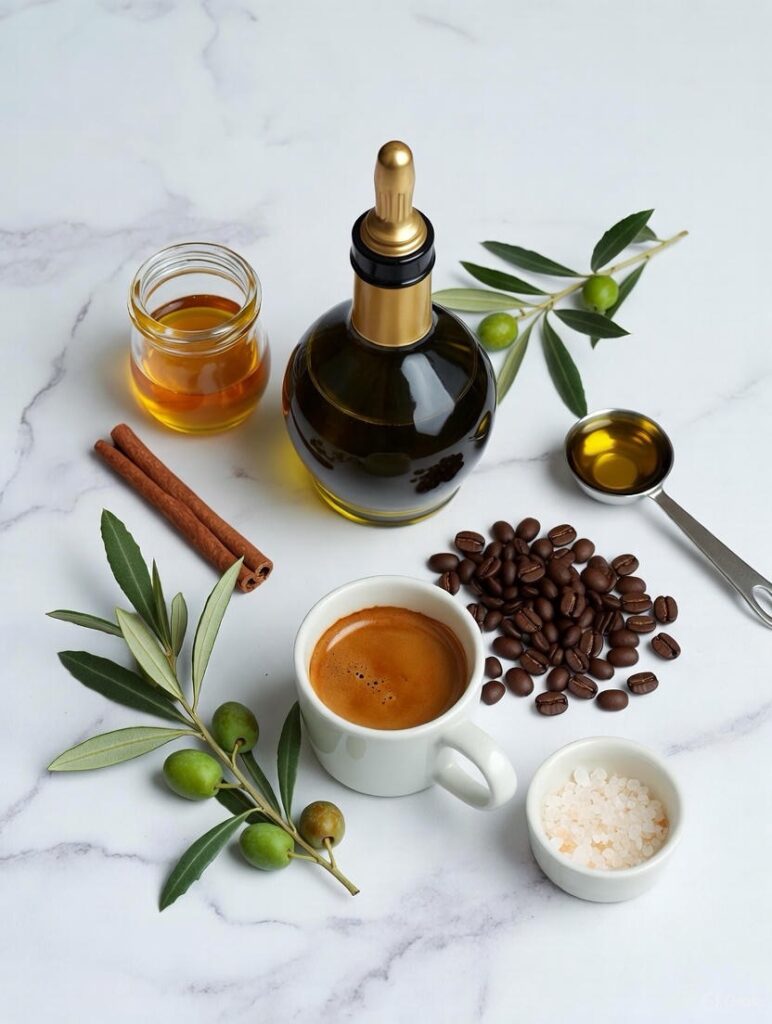
- 8 oz (240ml) freshly brewed hot black coffee or espresso (2 shots)
- 1 tablespoon (15ml) extra virgin olive oil (start with 1-2 teaspoons if new to this)
- Optional: pinch of sea salt (enhances flavors)
Choosing your coffee:
- For beginners: Medium roast with balanced flavor
- For bold flavor: Dark roast espresso or French press
- For subtle complexity: Light roast pour-over or drip coffee
Choosing your olive oil:
- Mild and fruity: Spanish or Greek extra virgin (beginner-friendly)
- Robust and peppery: Italian or Tuscan extra virgin (for adventurous palates)
- Quality indicators: Cold-pressed, harvest date within last year, stored in dark bottle
Optional enhancements:
- Honey or maple syrup (1 teaspoon for sweetness)
- Cinnamon stick or ground cinnamon
- Vanilla extract (¼ teaspoon)
- Cocoa powder (½ teaspoon for mocha vibes)
- Cardamom (1-2 pods or pinch of ground)
- Lemon zest (for bright, Mediterranean notes)
Detailed Step-by-Step Instructions
Step 1: Brew Your Coffee
Start with freshly brewed, high-quality coffee. The brewing method is up to you—espresso, French press, pour-over, drip coffee, or even AeroPress all work well. The coffee should be hot and freshly made for the best emulsification with the olive oil.
If using espresso, pull 2 shots (about 2 oz or 60ml) directly into a preheated cup. For regular coffee, brew 8 oz (240ml) of strong black coffee. The coffee should be hotter than usual since adding room-temperature olive oil will cool it slightly.
Pro Tip: Use water just off the boil (around 195-205°F or 90-96°C) for optimal extraction. If your coffee tastes bitter or sour, adjust your water temperature or brewing time accordingly.
Step 2: Measure Your Olive Oil
Pour 1 tablespoon (15ml) of extra virgin olive oil into a small measuring spoon or directly into your coffee cup before adding the coffee. If you’re new to olive oil coffee, start with 1-2 teaspoons (5-10ml) and work your way up. You can always add more, but you can’t remove it.
Ensure your olive oil is at room temperature. Cold olive oil from the refrigerator won’t emulsify as well and will create an unpleasant oily slick on top of your coffee rather than blending smoothly.
Quality Check: Good extra virgin olive oil should smell fresh and fruity or grassy, never musty or rancid. If your oil smells like crayons or has no aroma, it’s likely old or low quality—don’t use it in your coffee.
Step 3: Combine Coffee and Oil
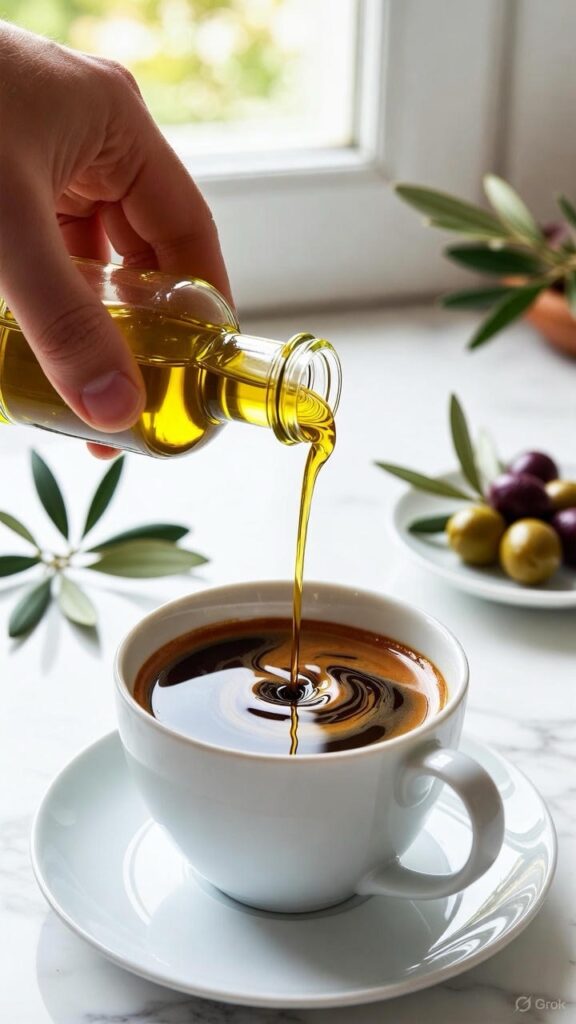
Pour the hot coffee directly over the olive oil. If you measured the oil into the cup first, the hot coffee hitting the oil will begin the emulsification process immediately. The heat is crucial—it helps the oil disperse throughout the coffee rather than floating on top.
You’ll notice the olive oil creates a golden sheen on the surface of the coffee. This is normal and part of the visual appeal. Some people love this glossy appearance; others prefer to blend it further.
Step 4: Stir or Froth for Emulsification
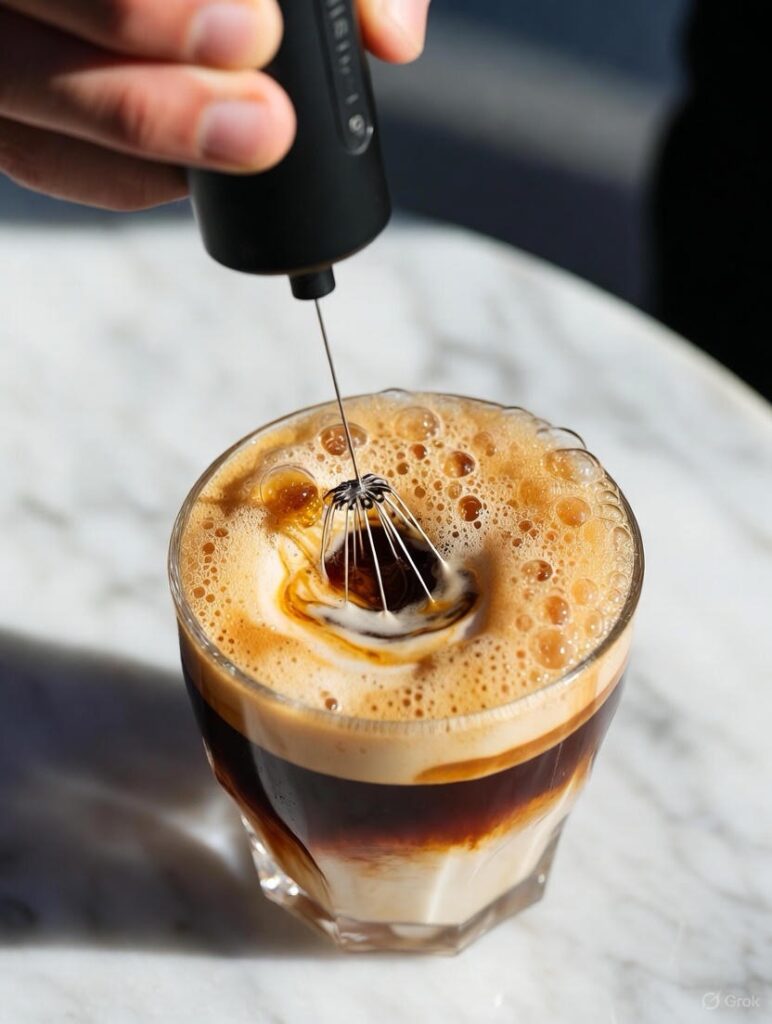
This step is critical for texture. Use a small whisk, milk frother, or even just a spoon to stir the coffee vigorously for 15-20 seconds. The goal is to emulsify the oil with the coffee, creating a smooth, integrated beverage rather than coffee with oil floating on top.
For the best texture, use a handheld milk frother (the battery-operated kind) for 10-15 seconds. This creates tiny bubbles and a creamy, almost latte-like foam on top without any dairy. The vigorous agitation breaks the oil into microscopic droplets that suspend throughout the coffee, coating your palate with each sip.
If you have a blender, you can blend the coffee and oil together for 5-10 seconds for an ultra-smooth, emulsified result. This method creates the most luxurious texture but isn’t necessary for a good result.
Step 5: Add Optional Enhancements

If you want to enhance your olive oil coffee, now is the time. Add a tiny pinch of sea salt—it sounds odd, but it enhances both the coffee’s natural flavors and the olive oil’s fruity notes while reducing any bitterness.
For sweetness, add honey or maple syrup and stir well. The fat from the olive oil helps carry sweet flavors more effectively. A dash of cinnamon, cardamom, or vanilla extract can add aromatic complexity that complements the Mediterranean character of the olive oil.
If adding lemon zest, use a microplane to add just a few fine shreds. The citrus brightens the coffee and plays beautifully with fruity olive oil varieties.
Step 6: Taste and Adjust
Take your first sip. The coffee should feel noticeably smoother and more velvety on your palate than regular black coffee. The olive oil should be present but not overwhelming—you shouldn’t feel like you’re drinking straight oil.
If the olive oil flavor is too strong, add a bit more hot coffee or hot water to dilute. If you can barely detect it, add another teaspoon of oil and froth again. Finding your personal preference may take a few attempts.
The finish should be clean, not greasy. If your mouth feels coated in an unpleasant way, you either used too much oil or didn’t emulsify it properly. Next time, use less oil and froth more vigorously.
Step 7: Enjoy Immediately

Olive oil coffee is best consumed fresh and hot. As it cools, the oil can separate and the texture changes. Drink it within 10-15 minutes of preparation for the best experience.
Sip slowly and pay attention to how the texture differs from your usual coffee. Notice how the oil creates a silky mouthfeel, how the flavors evolve as you drink, and how your body feels—many people report a more sustained energy without jitters.
Health Benefits of Olive Oil Coffee
Olive oil coffee combines the benefits of both ingredients into one functional beverage. Coffee is rich in antioxidants and has been linked to improved focus, enhanced physical performance, and reduced risk of certain diseases. Olive oil, particularly extra virgin, contains powerful polyphenols and monounsaturated fats that support heart health, reduce inflammation, and may improve brain function.
The combination of caffeine with healthy fats can provide more sustained energy than coffee alone. The fats slow the absorption of caffeine, preventing the rapid spike and crash that some people experience. This can lead to more stable energy levels and focus throughout the morning.
For those following a ketogenic diet, olive oil coffee fits perfectly as a way to add healthy fats to your morning routine while staying in ketosis. The monounsaturated fats support the body’s fat-burning state without adding carbohydrates.
The anti-inflammatory properties of extra virgin olive oil may also help counteract any potential inflammatory effects of coffee in sensitive individuals. The polyphenols in both ingredients work synergistically to provide antioxidant benefits.
However, it’s important to note that olive oil is calorie-dense. One tablespoon contains about 120 calories, all from fat. While these are healthy fats, they do add significant calories to your coffee. If weight management is a goal, be mindful of portion sizes.
Common Mistakes and How to Avoid Them
Using low-quality olive oil: This is the biggest mistake. Cheap, refined olive oil or rancid oil will ruin your coffee. Invest in good extra virgin olive oil stored properly in a dark bottle.
Adding too much oil: Start small. One tablespoon might be too much for beginners. Start with 1-2 teaspoons and increase gradually as your palate adjusts.
Not emulsifying properly: Simply pouring oil into coffee creates an oily slick on top. You must whisk, froth, or blend vigorously to create that smooth, integrated texture.
Using cold coffee or cold oil: Temperature matters. Both the coffee and oil should be warm for proper emulsification. Cold temperatures cause the oil to solidify and separate.
Choosing incompatible flavors: A super robust, bitter oil with a delicate light roast coffee can clash. Match intensity levels—mild oil with mild coffee, bold with bold.
Expecting it to taste like a latte: This isn’t a dairy alternative meant to replicate milk. It’s its own unique experience with different textures and flavors. Approach it with an open mind.
Drinking it cold: Unlike cold brew with cream, olive oil coffee doesn’t work well cold. The oil solidifies and separates, creating an unpleasant texture.
Variations and Flavor Combinations
Iced Olive Oil Coffee (Advanced)
While tricky, it’s possible. Use liquid lecithin (¼ teaspoon) as an emulsifier, blend hot coffee with olive oil and lecithin until smooth, then pour over ice. The lecithin prevents separation when cold.
Honey Cinnamon Olive Oil Coffee
Add 1 teaspoon honey and ¼ teaspoon cinnamon to your olive oil coffee. The combination tastes like a healthier, more sophisticated version of a sweetened latte.
Cardamom Olive Oil Coffee
Crush 2 cardamom pods and add to your coffee grounds before brewing, or add a tiny pinch of ground cardamom to the finished olive oil coffee. Very Mediterranean and aromatic.
Lemon Olive Oil Espresso
Add a twist of lemon peel and a tiny pinch of lemon zest to espresso with mild, fruity olive oil. Bright, refreshing, and perfect for morning.
Vanilla Maple Olive Oil Coffee
Add ½ teaspoon vanilla extract and 1 teaspoon maple syrup for a naturally sweet, dessert-like coffee that’s still dairy-free.
Spiced Olive Oil Mocha
Add ½ teaspoon cocoa powder and a pinch of cayenne pepper for a spicy, chocolatey twist on olive oil coffee.
Turmeric Golden Olive Oil Coffee
Add ¼ teaspoon turmeric and a pinch of black pepper (enhances turmeric absorption) for an anti-inflammatory powerhouse drink.
Frequently Asked Questions (FAQ)
Does olive oil coffee taste oily or greasy?
When made correctly with proper emulsification, no. It should taste smooth and velvety, similar to adding cream but with different flavor notes. If it tastes greasy, you used too much oil or didn’t blend it well enough.
What kind of olive oil should I use?
Always use extra virgin olive oil—it’s the highest quality with the best flavor and most health benefits. Choose a fresh, high-quality brand. The flavor profile (mild/fruity vs. robust/peppery) depends on your preference.
Can I make this with cold brew?
It’s very difficult. Cold temperatures cause olive oil to solidify and separate. If you must try it, use an emulsifier like liquid lecithin and blend thoroughly. Hot coffee works much better.
Is olive oil coffee healthy?
It can be part of a healthy diet. You’re getting heart-healthy fats and antioxidants from the olive oil, plus coffee’s benefits. However, it adds 120+ calories from the oil, so be mindful if watching calorie intake.
Why is my olive oil floating on top?
You didn’t emulsify it properly. The coffee might not be hot enough, or you didn’t whisk/froth vigorously enough. Use a milk frother or blend it for better results.
Can I use this for weight loss?
The healthy fats can promote satiety and sustained energy, which may help with appetite control. However, olive oil is calorie-dense, so portion control matters. It’s popular in keto and intermittent fasting communities.
Does it break a fast?
Yes, olive oil contains calories and fat, which will break a water-only fast. However, some people following fat-adapted or keto fasting protocols include it as part of their routine.
What does it taste like?
The coffee tastes smoother and more velvety, with subtle fruity, grassy, or peppery notes from the olive oil depending on the variety used. It’s less bitter than black coffee and has a richer mouthfeel.
Can I add milk or cream?
You can, though it defeats the purpose of the dairy-free aspect. The olive oil and dairy might not combine well texturally. If you want both, add a small splash of milk.
How much olive oil should I use?
Start with 1-2 teaspoons (5-10ml) and work up to 1 tablespoon (15ml) maximum. More than that can be overwhelming and adds unnecessary calories.
People Also Ask (PAA)
Why did Starbucks add olive oil to coffee?
Starbucks created the Oleato line inspired by Mediterranean traditions and the potential health benefits of consuming olive oil daily. The concept came from observing Italian customs of taking olive oil in the morning.
Is olive oil in coffee good for you?
Olive oil provides heart-healthy monounsaturated fats, antioxidants, and anti-inflammatory compounds. Combined with coffee’s benefits, it can be a healthy addition when consumed in moderation as part of a balanced diet.
Does olive oil coffee help you lose weight?
The healthy fats may increase satiety and provide sustained energy, potentially helping with appetite control. However, olive oil is calorie-dense (120 calories per tablespoon), so portion size matters for weight management.
Can you put olive oil in cold coffee?
It’s challenging because cold temperatures cause olive oil to solidify and separate. If attempting, you need an emulsifier like lecithin and must blend thoroughly. Hot coffee works much better.
What type of olive oil is best for coffee?
Extra virgin olive oil is essential. Choose fresh, high-quality oil. Mild, fruity varieties work well for beginners. More robust, peppery oils suit adventurous palates and pair with dark roast coffee.
Does olive oil coffee taste good?
Opinions vary widely. Some people love the smooth, velvety texture and unique flavor complexity. Others find it unusual or too rich. Starting with small amounts and quality ingredients improves the experience.
How many calories in olive oil coffee?
Plain black coffee has minimal calories, but adding 1 tablespoon of olive oil adds approximately 120 calories, all from fat. This increases significantly if you add sweeteners or other ingredients.
Is olive oil coffee anti-inflammatory?
Both coffee and extra virgin olive oil contain anti-inflammatory compounds. The polyphenols in olive oil combined with coffee’s antioxidants may provide anti-inflammatory benefits when consumed regularly.
Conclusion
Olive Oil Coffee represents a fascinating intersection of coffee culture, Mediterranean traditions, and modern functional beverage trends. This unexpected combination challenges our assumptions about what coffee can be, offering a dairy-free, nutrient-dense alternative to traditional lattes and cream-laden coffee drinks.
What makes olive oil coffee particularly intriguing is how it transforms the coffee-drinking experience without fundamentally changing what coffee is. You’re still enjoying the rich, complex flavors of quality coffee—you’re just enhancing it with the silky texture and subtle complexity that good olive oil provides. It’s coffee, elevated.
The health benefits add another dimension to its appeal. Starting your day with both coffee’s antioxidants and olive oil’s heart-healthy fats creates a functional beverage that goes beyond simple caffeine delivery. The sustained energy without jitters, the potential anti-inflammatory effects, and the satisfaction of consuming quality fats all contribute to its growing popularity.
Of course, olive oil coffee isn’t for everyone, and that’s perfectly fine. It’s a personal preference, much like preferring espresso over drip coffee or oat milk over almond milk. The key is approaching it with an open mind, starting with small amounts, using quality ingredients, and giving yourself time to adjust to the unique texture and flavor profile.
Whether you’re inspired by the Mediterranean lifestyle, following a keto diet, looking for dairy alternatives, or simply curious about viral food trends, olive oil coffee offers an intriguing experience worth trying. Make it at home with this guide, experiment with different oils and coffee varieties, and discover whether this trending beverage earns a place in your daily routine.
Who knows? You might just find that this unusual combination becomes your new morning ritual—a small moment of luxury and wellness that sets the tone for your entire day. Welcome to the world of olive oil coffee!
Prep Time: 2 minutes
Cook Time: 5 minutes (brewing coffee)
Total Time: 7 minutes
Servings: 1
Difficulty: Easy
Cuisine: Mediterranean-inspired, Coffee Culture
Course: Beverage, Breakfast
Diet: Vegan, Dairy-Free, Keto-Friendly, Paleo
Keywords: olive oil coffee, Oleato, Starbucks olive oil coffee, dairy-free coffee, keto coffee, Mediterranean coffee, healthy coffee recipe